

The Edge
“You’re dying.”
Those words are startling to hear, even for someone who is passively suicidal.
“None of what I am doing is working. I suggest you focus on enjoying the time you have left.”
I was speaking with an energy healer. My friend had referred to him, thinking he would be able to help with my deep grief after the death of my husband.
“Your soul wants to be with him, and he is reaching for you too. Soon your energy will become so diffuse that you join him.”
“Okay, thanks?”
I didn’t know what to say. Really, how are you supposed to respond to something like that?
Yes, part of me wanted to die. But the bigger part did not.
What We Don’t Know How to Do
We barely know, as a culture, how to talk about death, or grief, let alone how to guide ourselves, or someone else, back from the edge.
The energy healer was correct that I was too fundamentally altered to be called back to the person I used to be. Five years later, the biggest thing I understand now that neither of us understood that day was that there are other ways of moving forward.
Grief, even intense grief, isn’t a bad thing. He couldn’t bring me back because I was in the middle of a journey that wasn’t finished. The journey mattered, and it was already guiding me forward in important ways.
Grief as a Gateway
In a world that glorifies, and sometimes even necessitates, emotional numbness, grief is a gateway to being human. When we give ourselves to the journey, in darkness we find light, and in death we find life.
Grief has the potential to challenge and transform all the parts of us. Energy, yes. Also emotion, intellect, body, interpersonal patterns, spiritual connections. And the problem is that no one talks about this. For this most universal human experience, there is no universally understood roadmap.
The Map We Do Know
You know the roadmap for other life quests—even if you haven’t named it, you’ve seen it in books and movies, and if you look further back, stories and myths. It’s so pervasive that it is often the way we subconsciously organize our thoughts and approach our own life challenges.
Picture this: An ordinary person is going about life. They receive a call to adventure—something they never expected and probably didn’t want. In following the call they face challenges, are guided by mentors, test their strength and determination, and in the end return triumphant and transformed.
Joseph Campbell named this template the Hero’s Journey in The Hero’s Journey in The Hero with a Thousand Faces, published in 1949. He described patterns that had persisted for millennia. Even if you have never heard of Joseph Campbell or his work, you probably resonate with the idea. It’s the framework behind old and new stories like Lord of the Rings, Star Wars, The Lion King, The Matrix, The Percy Jackson series, The Odyssey, Beowulf, Dr. Strange, and more.
Some call it the universal journey of being human.
The Journey No One Gave Us a Map For
The problem is that grief, that other universal journey of humanity, doesn’t fit the template.
The hero’s journey is about becoming powerful through taking action. The hero on their quest takes external steps like fighting monsters and solving problems, in order to bring peace and safety to the kingdom.
It doesn’t work that way with grief. What is the hero supposed to do when the enemy is something as slippery as the nature of humanity, or as immutable as death?
Trying to Bring the Dead Back
There is evidence that we have tried to make the pattern work. Many cultures have myths about heroes visiting the afterworld, seeking to bring back a loved one or to change the governing rules for life and death. The longing is deep enough to form the underpinning for multiple religious traditions.
But for the individual seeker, the Demeter who wants to bring Persephone back from the underworld, the practical possibilities are discouraging. Hope often rests in another realm—beyond the veil of this one—and in the resulting sense of powerlessness mourners may sink into depression—or be consumed by rage.
Wisdom We Were Taught to Ignore
What if we need a different paradigm? A paradigm that better captures the reality of our shared human experience, and that offers a different map for becoming powerful, and a different definition of what that power looks like.
These paradigms have also existed for millennia, especially among the voices of women and Indigenous peoples. Their teachings have long addressed grief, loss, and transformation, yet they have often been devalued or dismissed by dominant cultural narratives. As the global community confronts the consequences of imbalance, disconnection, and an overreliance on conquest-based ways of knowing, the urgency to listen to perspectives that have been historically silenced becomes increasingly clear.
Engaging these traditions requires care. Study and practice must honor those who have walked this terrain before us, with explicit attention to avoiding appropriation or extraction. When we approach grief with a hero’s-journey mindset, we risk carrying an unexamined agenda—to conquer, defeat, overcome, pillage, or deconstruct—rather than to listen, learn, and be shaped by what we encounter.
Wisdom We Were Taught to Ignore
There are differences in the hero’s journey through grief:
The goal is to learn, respect, and become, not to conquer, defeat, overcome, pillage, or deconstruct.
There is an understanding that not every question will be answered in the time we want, in the way we expect.
We understand that we are working with forces that are expansive and powerful, and the knowing we encounter in these realms is vast and sometimes unspeakable.
We are invited into a realm of being rather than a realm of doing.
When we approach the space where lines blur between life and death, ego dissolves, and we experience instead connection, humility, and presence.
The Dragon’s Way
Imagine yourself as a knight, riding proudly home on your stallion, banner sailing after slaying the dragon. You are the victor.
This is the hero’s journey.
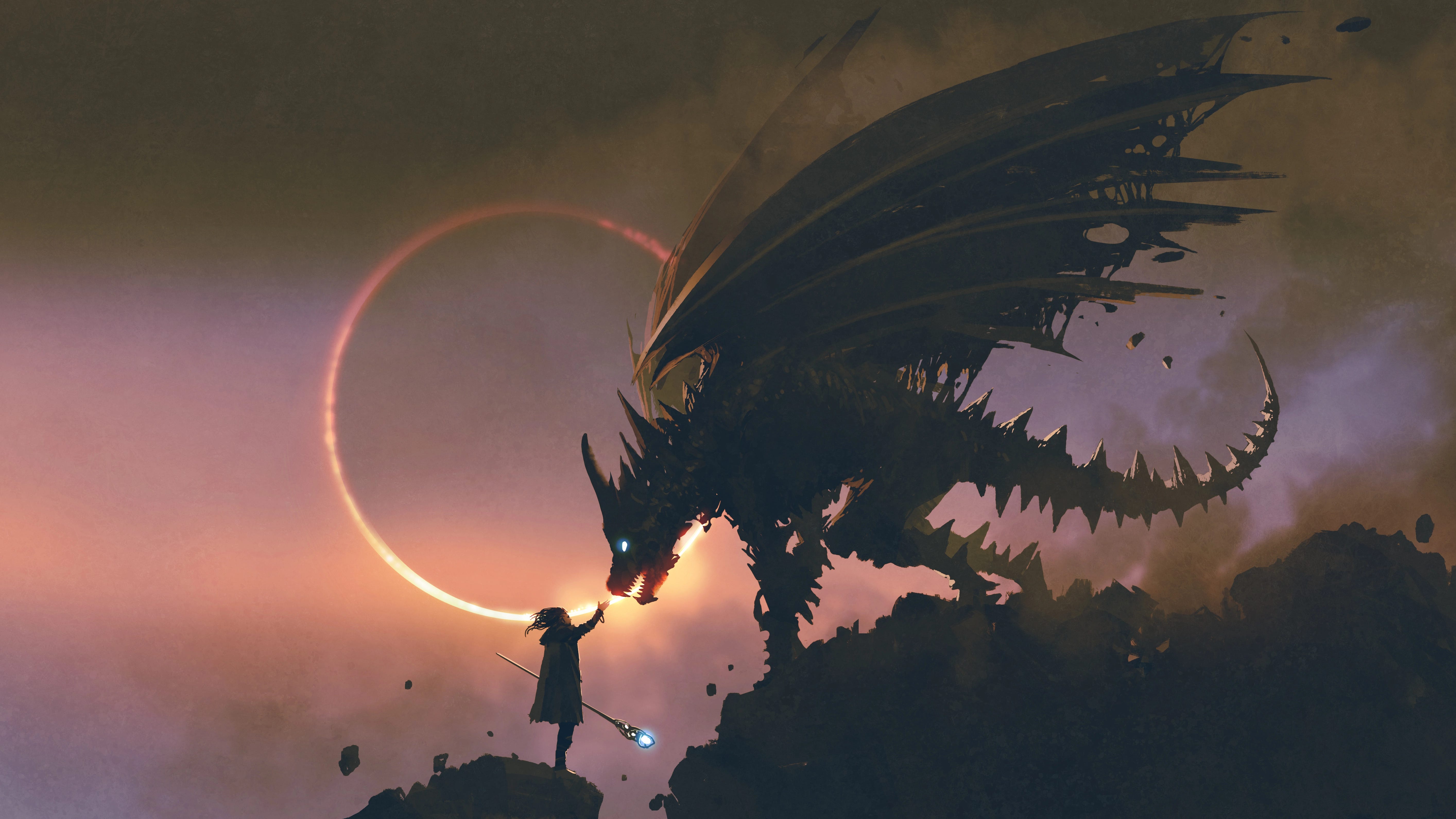
Now imagine yourself instead as the dragon’s apprentice. She allows you to travel with her to the secret realms, where you experience what it is to fly, and learn the flavor of fire. You have not conquered her, because her power exceeds your own. Instead, you honor the gift of her presence.
This is the journey grief invites us to take.
An Ancient Map
This map is hard to find, and when we do, it is even harder to understand. It is as though it were written in a foreign language. Each step of the journey is measured, paced by our progress with translation and deciphering, as though we were following an ancient parchment recovered from the underworld, its markings revealing themselves gradually, only as we are willing to linger with them.
What I Wish Had Been Said
Here is what I wish that healer had been able to say to me, years ago:
You are not dying. You are grieving.
Grief can feel like annihilation because it dismantles the structures that once held us. It rearranges the nervous system and softens the boundaries of self. It loosens identity, certainty, and even the familiar sense of time. When grief is deep enough, it can feel indistinguishable from death itself.
But this does not mean you are meant to disappear.
It means you are in an initiation.
Learning to Stay
Growth inspired by grief moves differently. Power is not found in control, mastery, or answers. It is found in capacity: The capacity to stay, to feel, and to hold paradox without resolving it. We reframe progress in terms of relationship instead of victory.
In this experience of profound disconnection, you are learning to be in relationship with absence, with longing, and with love that no longer has a physical home. As you sit with the conflict between love and the limits of form, you yourself are deepened and enlarged.
Sacred Terrain
As the impulse to escape grief—or rise above it, or rush its healing—softens, another landscape comes into view. Grief reveals itself as wild and sacred terrain. In these liminal lands, ego softens, and something older and wiser begins to speak.
This is where the dragon becomes a teacher and the underworld becomes a classroom. What matters here is presence — the willingness to stay, to listen, and to be shaped by what you encounter.
If You Are Here
What I needed then was permission to stay alive inside the pain. I needed someone to trust that grief had intelligence—that it knew where it was taking me, even when I did not.
If you are here now—hovering near that edge—I see you.
The Story Continues
You are learning how to live inside a world that has been irrevocably changed. This learning asks everything of you. It reshapes attention, patience, and trust. It is holy work.
Grief marks a turning in the story, a place where the language darkens and deepens. What is being written now carries weight, texture, and truth born of love.
You are still here.
You are still becoming.
And the story is still unfolding.